

Plus: ChatGPT roasts my week, 11 months since Opus 4.5, and Astra’s video capabilities.

For the past few months, working with AI felt like choosing between a drunkard (Opus 5) and a $250-an-hour engineer (Fable). Then, two weeks ago, Mr. Wolf showed up. He fixes anything I want and costs less per week than that engineer charges per hour.1
If you’ve grown indifferent to new AI model releases, now’s the time to make an exception. Anthropic’s Claude Opus 5.5 and ChatGPT’s computer use (running on OpenAI’s GPT-6.1 Sol2) have changed how I work with AI more than any other release this year.
Opus 5.5 does the work of Fable (Anthropic’s top model) at less than half the price, and finally writes in human English again. ChatGPT’s computer use is like having a capable human sitting at your computer.
My system: an impulsive creative’s mess
To explain why these two releases matter so much to me, I have to make a confession:3 I’m an impulsive creative, not a systematic analyst. You might assume the opposite: “this guy is good with AI, so he must work with an engineer’s discipline.” I do not, and that made the past six months professionally tough.
I’m now Animalz’s Director of AI and Content Engineering.4 Of course, that’s a great privilege (and an indulgence, to play around with AI all day and call it work). But the job goes beyond that. I need to build things that scale technically (they don’t break) and in adoption (other people can use them). That’s much harder than just creating things for your own use.
Confronted with that challenge, Fable and Opus 5 arrived to make things worse. Both were more powerful than previous models, so I built more boldly. But Opus 5 was like a superstar coworker turned drunkard: once reliable, even indispensable, still capable of brilliance, but now making unexplainable mistakes at critical moments, all while talking like an alien.5
Fable is a $250-an-hour rockstar engineer, sound in its brilliance and execution, but too expensive to use all the time. Some weeks, even with two plans, I hit my limits before the week was over.
The result was a mess. I built too much, too ambitiously, with a drunkard I couldn’t trust and a rockstar I couldn’t afford for the cleanup.
“I’m Opus 5.5. I solve problems.”
Opus 5.5 solves all this. I don’t run benchmarks, but I use these models eight hours a day, and as far as I can tell the new Opus is as good as Fable or better.
When I still ask Fable for a second opinion, it sometimes catches something Opus didn’t, but those catches feel random. Anthropic’s own claim is that it performs at the level of Fable 5.1 on most work, and on Anthropic’s API it costs $4 per million input tokens to Fable’s $10.
Opus 5.5 is thorough and proactive in all the right ways. Its builds are solid, and it finds bugs without me asking: while fixing how Claude reads data from Lifeline, the Pomodoro app I built, it noticed the app returned today’s data whenever you asked for a day it had no record of.
It also discovers outdated docs and duplicate tasks in the farthest corners of my systems, even when they’re not obviously related to the current work.
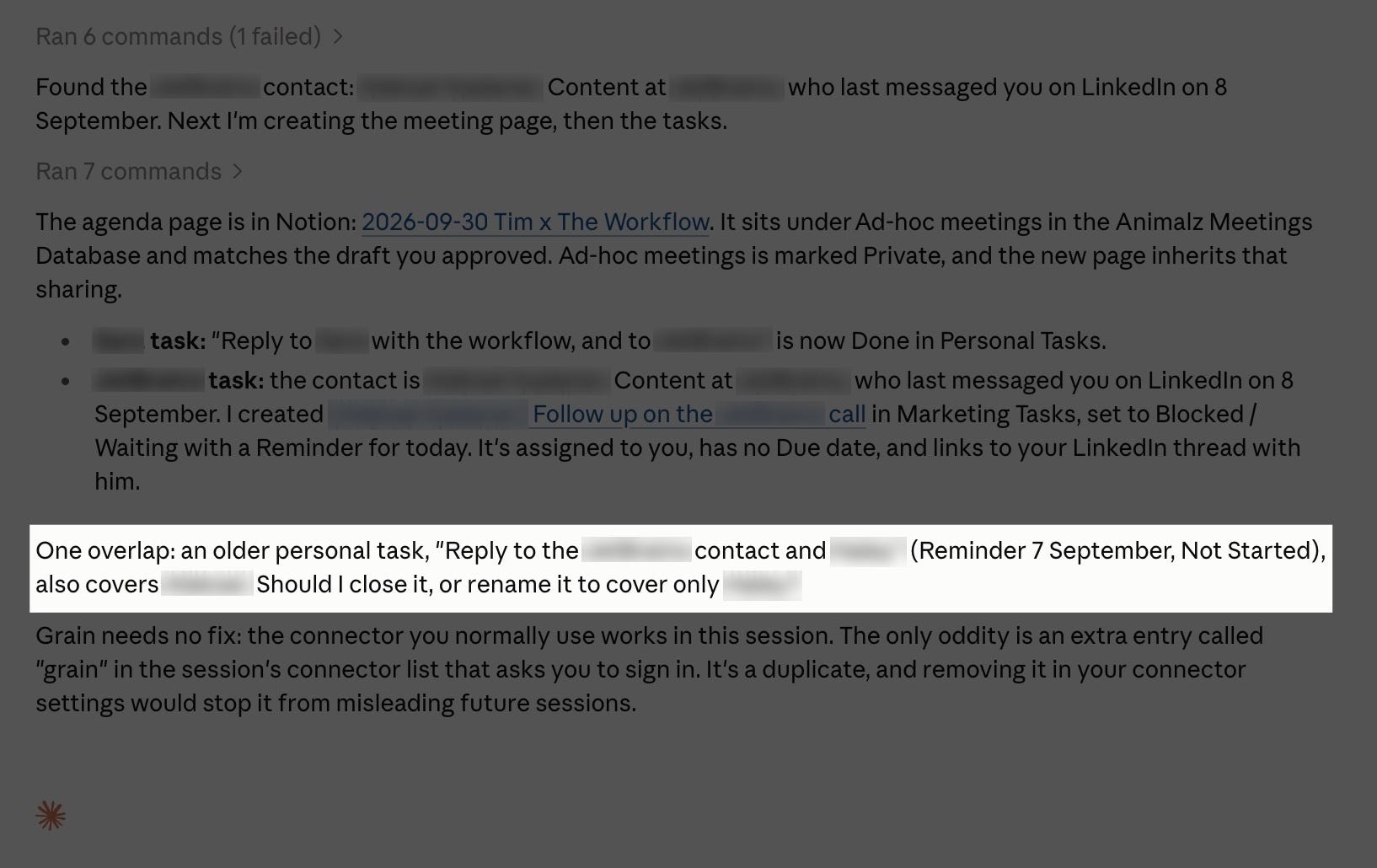
Oh, and the model speaks English again: it BLUFs (most important point first), bullet points show up where they help, and it doesn’t repeat itself.
Opus 5.5 is a non-technical AI builder’s best friend: it produces awesome, solid shit while cleaning up your mess.
ChatGPT: a capable human at your computer
With computer use, ChatGPT uses your computer like a human would. It has handled jobs I used to do myself, often faster.
I started with the hardest thing I’ve ever tried in a user interface: building trail-running routes in Strava. On the trails here on Koh Samui, every click can snap the route onto the wrong path, and fixing it is so fiddly I’d given up on building trail routes with Strava.
I gave ChatGPT one broken route, and it fixed it within minutes. Then I asked it to find my ten most-run routes of the past year, check which ones were missing from Garmin Connect (where my watch gets its routes), build those, and come up with a better naming system. 20 minutes later, every route was built and named, without a single mistake.
Here’s other stuff it has done for me since. None of it goes through MCPs, APIs, or scripts (the plumbing programmers use to connect software). It uses the websites and apps on my computer, the same way I would:
Find the best flights for my mother to visit us in Thailand, book them, and handle her entire e-visa application online.6
Check my sleep and download my workout files from Garmin every morning, then drop them where my daily planning session picks them up.
Download receipts from vendor websites and file them in Deel for reimbursement, every month.
Run parts of my Claude sessions that need manual input, like test runs and setting up accounts, and check in with me when something needs judgment.
Work with Claude to create a video and images in Figma.
Most of these took just one kick-off instruction and a website login here and there.
I’m sure some of my engineering friends will look at this list and point out that most of it can be done far more efficiently without computer use. But that’s the point! I don’t know how to engineer these processes well. I’ve tried, and it would half work, or work for a few days and then break.
That’s why this pair is a godsend for the non-technical AI builder: Opus 5.5 builds well, doesn’t make a mess, and cleans up after Opus 5. ChatGPT’s computer use takes the jobs that neither Opus 5.5 nor I could do.
For now, I don’t have much left to wish for. If the frontier slows down, that’s fine with me: this pair will keep me busy for a long time.
Reads & Listens
Here’s what stood out in my reading and listening this week.
The year 11 months since Opus 4.5
Simon Willison (co-creator of Django) turned his closing keynote at WeAreDevelopers into a month-by-month review of the year in LLMs. It opens in November 2025:
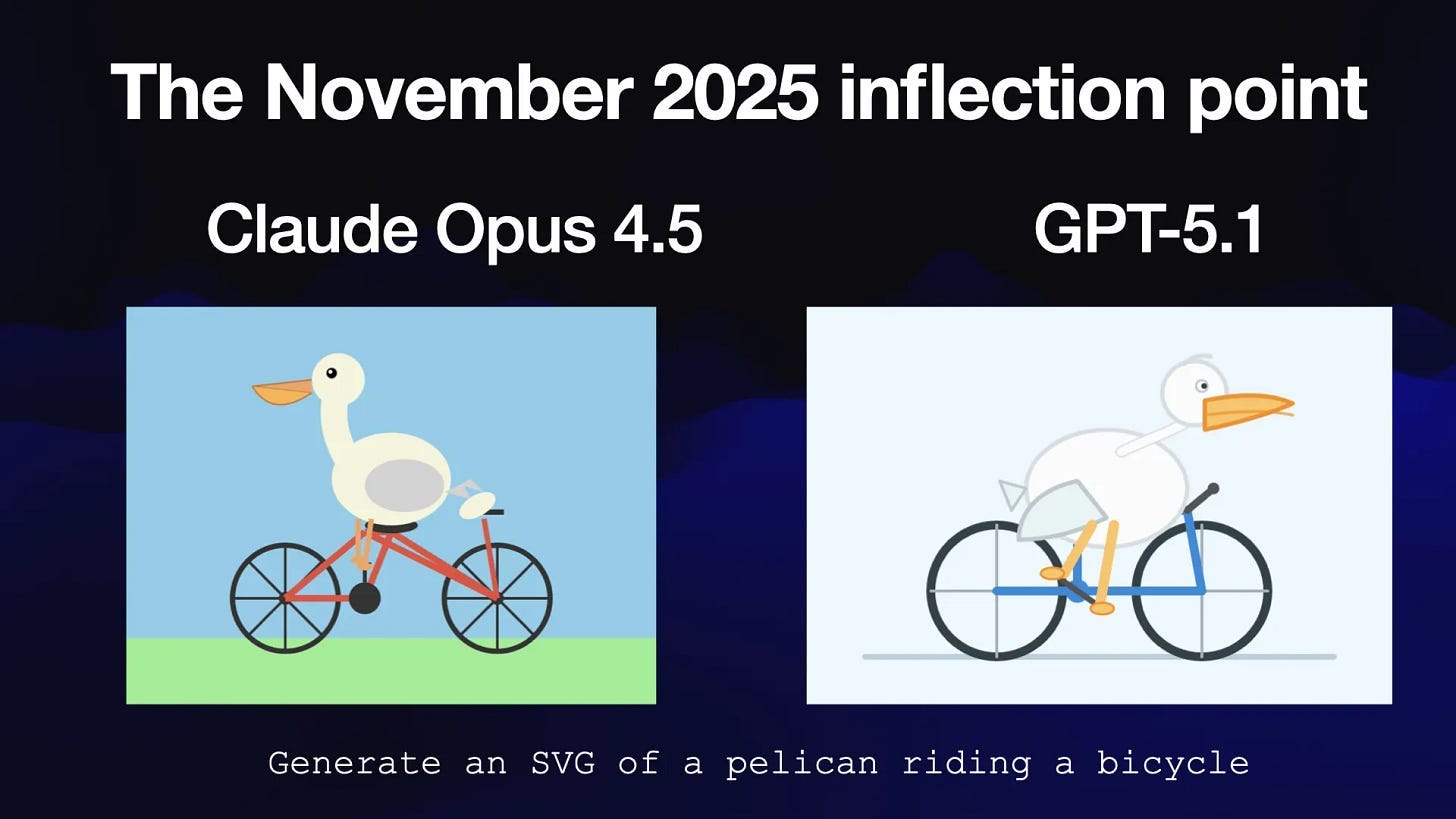
That stopped me in my tracks. I do remember working with Opus 4.5, and the difference it made compared to the models before it, but it feels like a distant memory, like years ago.
Reading the rest of Willison’s piece explained the feeling though. So much has happened since then: OpenClaw, MoltBook, Claude Mythos, Fable, AI agents escaping their training sandboxes, and much more I’d forgotten.
One year in AI now holds what used to take five or ten. 🤯 We need a word for that. AI dog years?
Computer use, in 3D
Ethan Mollick’s recent The Overhang is full of examples of what ChatGPT’s Astra, computer use, and Claude can do with 3D rendering and video editing.
He gave Astra his upcoming book, Co-Existence, and asked for a trailer. It built an animated 3D scene in Blender, wrote a script, generated voices and music, and delivered the film 45 minutes later. A more cinematic version followed, made by operating a video generator through his browser.
It’s incredible, and it pairs well with Every’s piece on what a visual effects studio is doing with the same tools, also full of real examples.
One more thing: ChatGPT has a feature called Computer History. When you turn it on, it tracks what you work on and suggests opportunities for automation, process improvements, and documentation.
Pretty handy, if you’re not worried about the Big Brother vibes. It also has a fun twist: it offered me a week in review based on my history, including a light roast.
Here’s mine for last week (no further comment):
Light roast: You built a personal operating system, a daily ritual, a focus app, an agent console, and a dashboard called Kill WIP Go Flow. Your commitment to simplicity has developed a substantial supporting infrastructure.
Somewhere, a task reading “finish the thing” is waiting patiently while two AI assistants discuss the optimal architecture for finishing things.
Thanks for reading!
Tim
My setup, to be fair about it: Claude’s Max 20 plan at $200 a month (about a dollar an hour across my working month), ChatGPT Pro at $100 a month, and a Claude Team Premium seat through work. That’s a lot of tokens and a powerful setup by most standards.
When I started this piece, I ran the first jobs, like the Strava routes, on GPT-6 Astra, OpenAI’s top model. Then GPT-6.1 Sol came out, nearly as good at a fifth of Astra’s API token prices, and I’ve run everything on it since. Sol is to Astra what Opus 5.5 is to Fable.
My LinkedIn profile doesn’t show the new title yet. I’ll update it soon.
Ethan Mollick calls that language “Claudish”: the dense, jargon-heavy dialect Claude slips into. Opus 5 would hand me sentences like “This doc fixes the architecture that claim sits inside.”
Some of this was easy because of what I’d already built. Our family’s travel details, like my mother’s passport number, live in Notion, and ChatGPT can read them when I give it permission, which is how it could book her flight. The same goes for how it writes and how it carries out some tasks: it builds on context engineering I did long before computer use arrived.